


I will admit I did not believe in this. When the leadership team first proposed adopting an AI automation platform to orchestrate workflows, decisions, and actions across the business, I was the one in the room who said it sounded like expensive plumbing dressed up in buzzwords. I had seen automation initiatives before. They produced dashboards no one checked and scripts that broke every quarter. The idea that we would connect data, systems, and AI models to run end-to-end processes with less manual effort and more consistency felt, to me, like a promise designed for a pitch deck rather than real operations.
I was wrong. Not dramatically wrong but overnight wrong. But steadily, quietly, undeniably wrong.
What an AI Automation Platform Actually Is

An AI automation platform is a centralized system that uses artificial intelligence to automate workflows, decisions, and operational actions across multiple teams and tools. What separates it from traditional automation is that it does not rely solely on static rules. It adapts to context, learns from outcomes, and continuously optimizes how work gets done. It typically includes intelligent workflow orchestration, AI-driven decisioning and prediction, integration with enterprise systems and data, real-time and asynchronous execution, governance and monitoring controls, and features like natural language automation and visual workflow builders. I had assumed all of this was theoretical, the kind of functionality that looks clean in a demo and collapses on contact with actual enterprise complexity. What I did not account for was how far the tooling had matured. Modern platforms offer no-code environments with drag-and-drop interfaces, allowing people across the business to design and deploy workflows without writing a single line of code. That changed things faster than I expected.
Why We Adopted It, Despite My Objections
The case for adoption was not hard to make, even if I resisted it. Manual processes were everywhere. Our automation tools were fragmented, disconnected from each other and from the systems that mattered. Operations were slow. Errors were frequent. Scale was a word we used in planning meetings but could not achieve in practice. The organization needed to reduce manual effort and operational cost, improve speed and accuracy, scale automation across teams and regions, enable data-driven decisions, and support complex cross-system workflows. What persuaded me to stop blocking the initiative was not the vision but the specificity. When the platform team showed how business users and non-technical teams could connect tools and automate workflows without engineering support, I realized this was not another IT project. It was an operational shift. I still had doubts, but I stopped voicing them and decided to watch.
What the Platform Could Actually Do
Enterprise-grade AI automation platforms combine several capabilities into a single operating layer. Intelligent workflow automation, AI-driven decisioning and orchestration, event-based and real-time automation, deep enterprise system integration, monitoring and lifecycle management, and a visual canvas for building workflows without code. Some platforms also support full AI agents and multi-step agent workflows. I had dismissed this as feature inflation. But the platform we deployed handled robotic process automation for routine rule-based tasks, broader business process automation across departments, and advanced AI automation incorporating machine learning and natural language processing. Teams used drag-and-drop interfaces and conditional logic to build workflows that integrated with the tools they already relied on. They automated repetitive tasks, orchestrated multi-step processes, and pulled insights from data without waiting in an engineering queue. The speed of adoption was the first thing that surprised me.
Intelligent Workflows and AI Decisioning

The workflows were not static. They routed work dynamically based on intent, priority, or risk. They adjusted actions in real time using live data. They learned from outcomes to improve performance and coordinated steps across multiple systems and teams. I had expected brittleness. What I observed instead was resilience. When conditions changed, the workflows adapted rather than failing. At the core of the platform was AI-driven orchestration, enabling automated decision-making within workflows, context-aware branching and escalation, and coordination of actions across systems. Many of these processes were powered by large language models capable of handling decisions that previously required manual judgment. I watched a workflow handle an edge case I was sure would break it, and it resolved cleanly, faster than a human would have. That was a quiet turning point for me.
Integration That Actually Worked
One of my deepest skepticisms was about integration. Our enterprise ecosystem included CRM and customer service platforms, contact center and workforce systems, ERP and operational tools, data platforms, analytics environments, and dozens of SaaS applications. The platform connected to tools like Gmail, Outlook, Salesforce, HubSpot, Notion, and supported flexible API management for additional services. I had expected months of integration work and constant breakage. Instead, the connectors held. The automation operated within our existing ecosystem rather than alongside it. That distinction mattered more than I had appreciated.
Security and Reliability
When automation touches critical business workflows, security and reliability are not optional. The platform we chose offered enterprise-grade encryption, granular access controls, comprehensive audit logs, advanced error handling, and version control. These were not features I had questioned on paper. What I questioned was whether they would hold under real operational pressure. They did. Downtime was negligible. Errors were caught and resolved quickly. The technical team maintained control, and compliance requirements were met without heroic effort.
Customer Service and Contact Center Impact
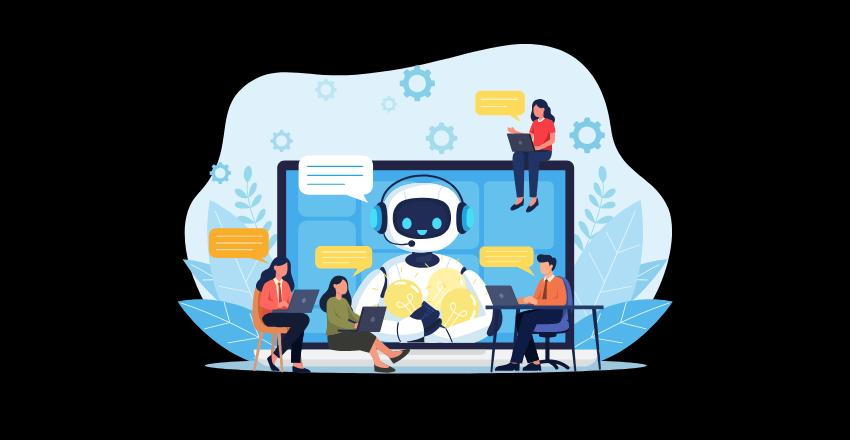
The most visible impact was in customer service and contact center operations. The platform automated customer service workflows, handled contact center routing and case management, enabled AI-driven resolution and escalation, orchestrated omnichannel service delivery, and supported proactive and predictive service actions. AI agents triaged inbound support emails, suggested responses, analyzed sentiment from social media mentions, and created tasks based on feedback. Customer experience improved. Cost to serve decreased. I had expected marginal gains. The gains were not marginal.
Governance at Scale
Scaling automation without governance is reckless. I had feared that would be our trajectory. Instead, the platform provided role-based access and permissions, approval workflows and safeguards, monitoring of automated actions and outcomes, full auditability and reporting, and alignment with compliance and security requirements. Governed automation allowed us to scale confidently without losing control. That confidence was hard-won, at least for me.
Real-Time and End-to-End Flexibility
The platform supported real-time responses to events and interactions, end-to-end automation across departments, asynchronous processing for complex workflows, and continuous operation without manual intervention. Some teams leaned on templates and intuitive interfaces. Others used advanced customization features. The platform accommodated both without forcing a single approach. That flexibility was something I had underestimated.
The Results
When implemented effectively, the platform delivered increased operational efficiency, faster execution and response times, reduced errors and rework, improved customer and employee experiences, and higher return on automation investments. These were the outcomes we had been promised. I had not believed they would materialize at the scale they did. The relief I felt was not dramatic. It was the quiet kind, the kind that comes when something you expected to fail simply works, day after day, without spectacle.
What I Would Tell Someone Choosing a Platform Today
Selecting the right AI automation platform requires evaluating technical depth and enterprise readiness together. Consider the breadth of automation and AI capabilities, integration with existing systems, scalability across teams and regions, governance and security support, and ease of extending automation to new use cases. Some platforms offer collaborative no-code environments for building and managing AI agents while also supporting advanced features for technical users. Start with high-impact, repetitive tasks. Implement incrementally. Monitor and evaluate continuously. Choose a platform that offers scalability, robust security, and an intuitive experience. Prioritize transparency, explainability, and accountability.
I doubted this approach. I was cautious where others were optimistic, and skeptical where others were confident. I am not embarrassed by that. Skepticism has its place. But the evidence accumulated, quietly and consistently, until my doubt simply had nowhere left to stand. The platform works. The automation scales. The business is better for it. That is not a concession I make lightly, which is exactly why it matters.


